
Key Sustainability Focus Areas
Responsible Waste Management

Optimising Consumption of Materials

Reducing Energy Consumption & Emissions


Environmental Compliance

For the Betterment of the Environment
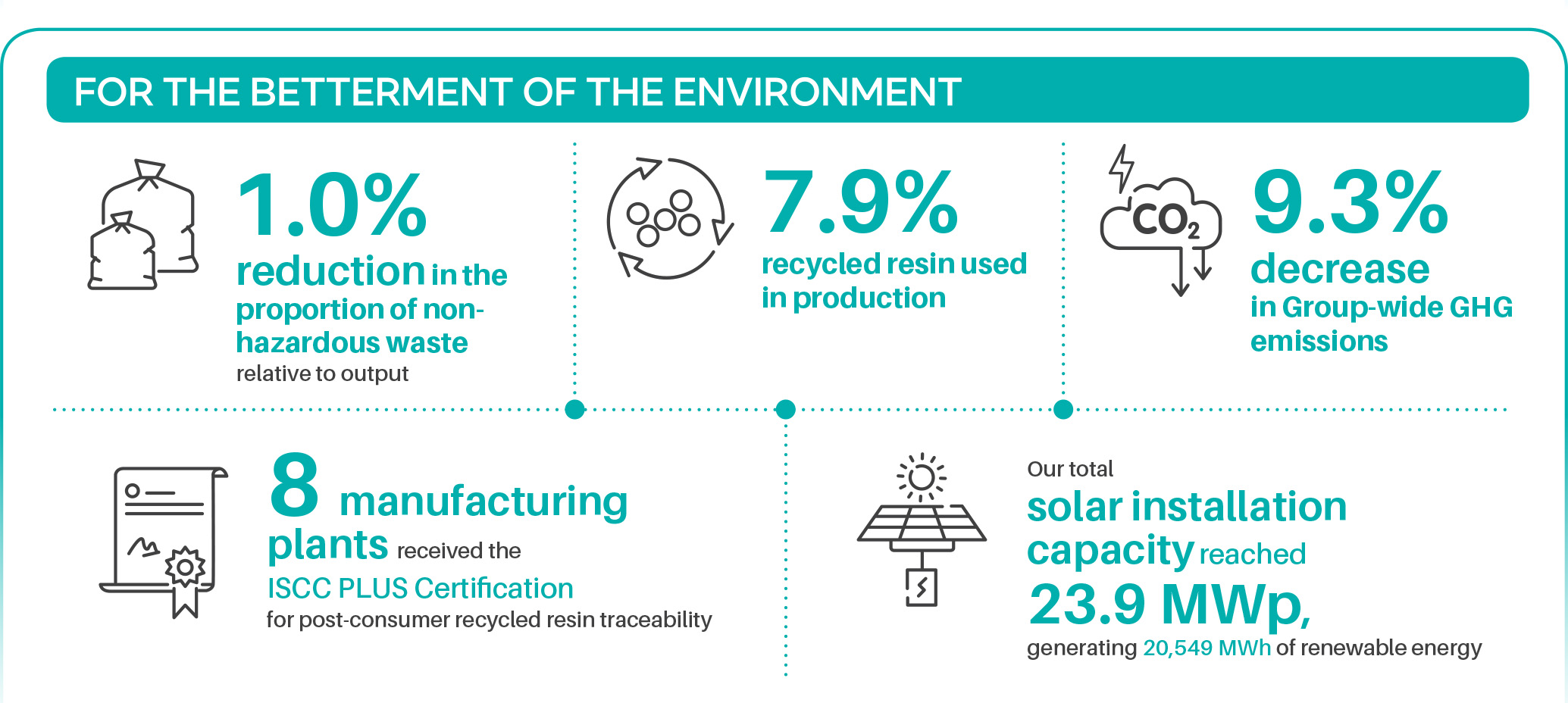
We recognise our responsibility to protect and preserve the planet for future generations, and we act on this belief through continuous investment in environmentally responsible practices across our operations.
Whether by reducing material footprint through the use of post-industrial recycled (“PIR”) or post-consumer recycled (“PCR”) resin, developing recyclable flexible plastic packaging (“FPP”) structures, or enhancing the energy efficiency of our production processes, we aim to create solutions that balance business needs with environmental stewardship.
At the same time, we take proactive steps to reduce our environmental impact by expanding the use of solar energy across our facilities, thereby reducing our carbon footprint, and offsetting emissions through our mangrove planting programme — an initiative that restores vital coastal ecosystems while strengthening climate resilience.
These efforts are guided by our Group-wide Environmental Policy, which defines clear standards for employees and suppliers alike, ensuring that environmental care remains a shared responsibility embedded within everything we do.
Responsible Waste Management
Advocating Responsible and Circular Practices
Aligned to
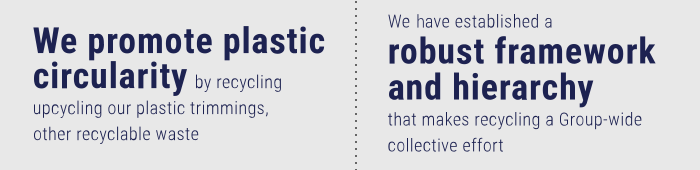
We are committed to making a positive contribution in the transition to circular economy practices by introducing solutions that minimise negative waste impacts, both within our production processes and during the lifecycle of our products. Doing so is especially vital given the introduction of increasingly stringent legislation in relation to plastic circularity and the changing expectations of our customers.
Our approach to waste management encompasses:
- Adherence to our waste management framework and hierarchy, which is supported by our Group-wide Environmental Policy
- Reducing our production waste through continual enhancements of our machines and processes
- Minimising the potential environmental impact of mismanaged waste by increasing the utilisation of PCR resin in our packaging solutions
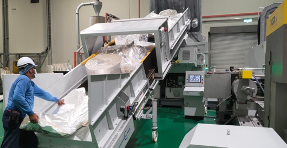
- Recycling waste by converting plastic recyclable into usable resources and converting non-recyclable waste into Processed Engineered Fuel
- Practicing the responsible management and disposal of scheduled waste and effluents
- Establishing stringent protocols for waste management at property development sites
- Introducing QR code scanning functionality for sales brochures, thus reducing the need for such brochures to be printed and minimising their subsequent waste footprint
- Promoting recycling of general waste amongst employees through our Reduce, Reuse and Recycle (“3R”) initiative, our “Back to Earth” composting programme, our fabric recycling initiative, and most recently, our E-Waste Recycling Drive
OUR PERFORMANCE:
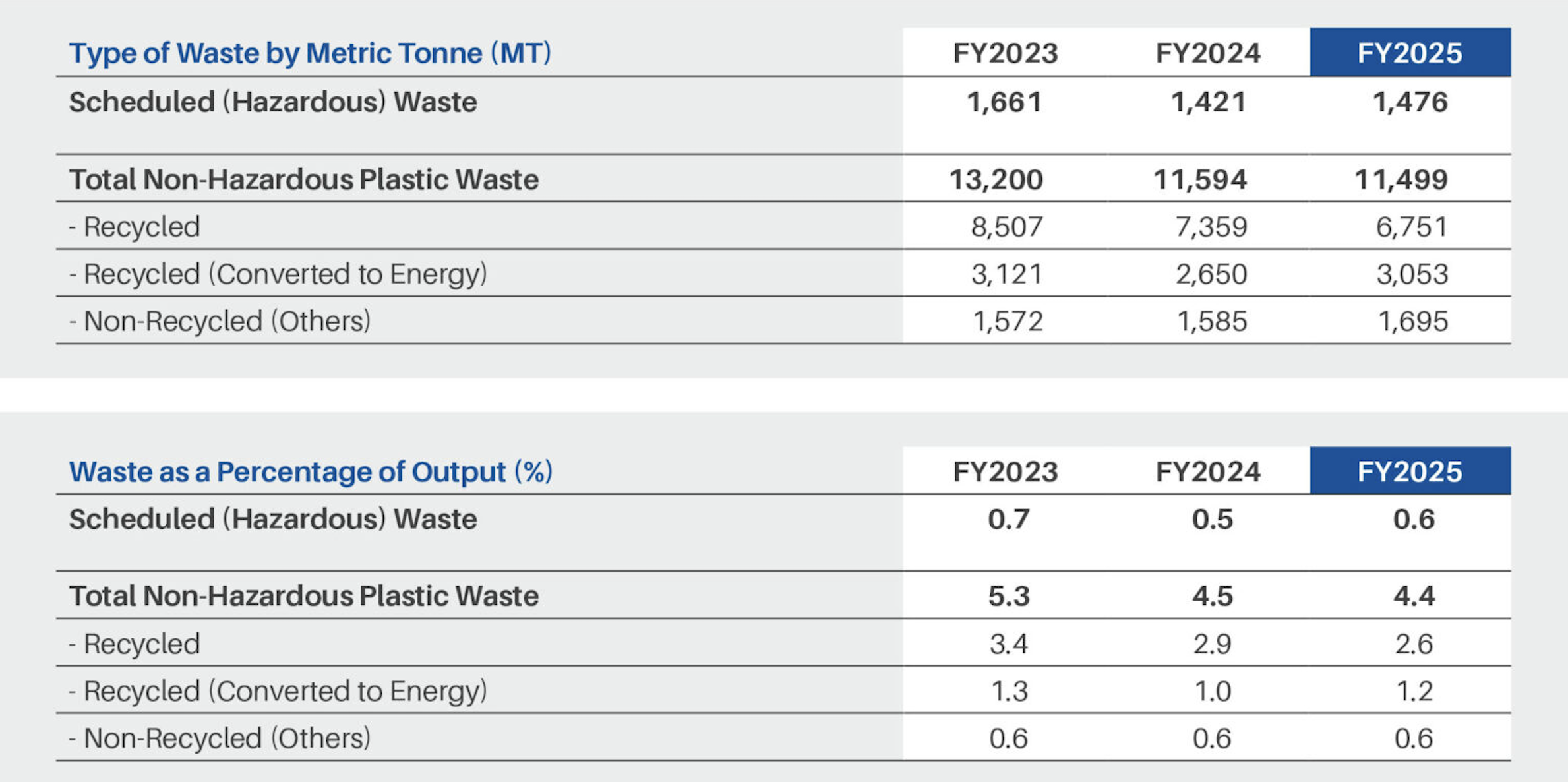
During FY2025, our proportion of scheduled waste relative to output was 0.6%, while our proportion of recycled plastic waste in relation to output stood at 3.8%.
Optimising Consumption Of Materials
Using Materials Efficiently and Responsibly
Aligned to
Recognising the key role that natural resources play as an input in our processes, we adopt a responsible approach that seeks to optimise material consumption through innovative packaging designs, efficient construction techniques, and the increased use of recycled and recyclable materials, while also sourcing materials responsibly from sustainable sources wherever feasible.
Our approach to optimising material use encompasses:
- Adherence to the resource utilisation guidelines outlined in our Group-wide Environmental Policy
- Increasing our recycling capacity and continually improving our efficiency in utilising PIR resin
- Innovating downgauged films and packaging products that are resource efficient without compromising on functionality and performance
- Prioritising procurement from responsible suppliers, such as those that are Forest Stewardship Council (“FSC”) or Aluminium Stewardship Initiative (“ASI”) certified, wherever feasible
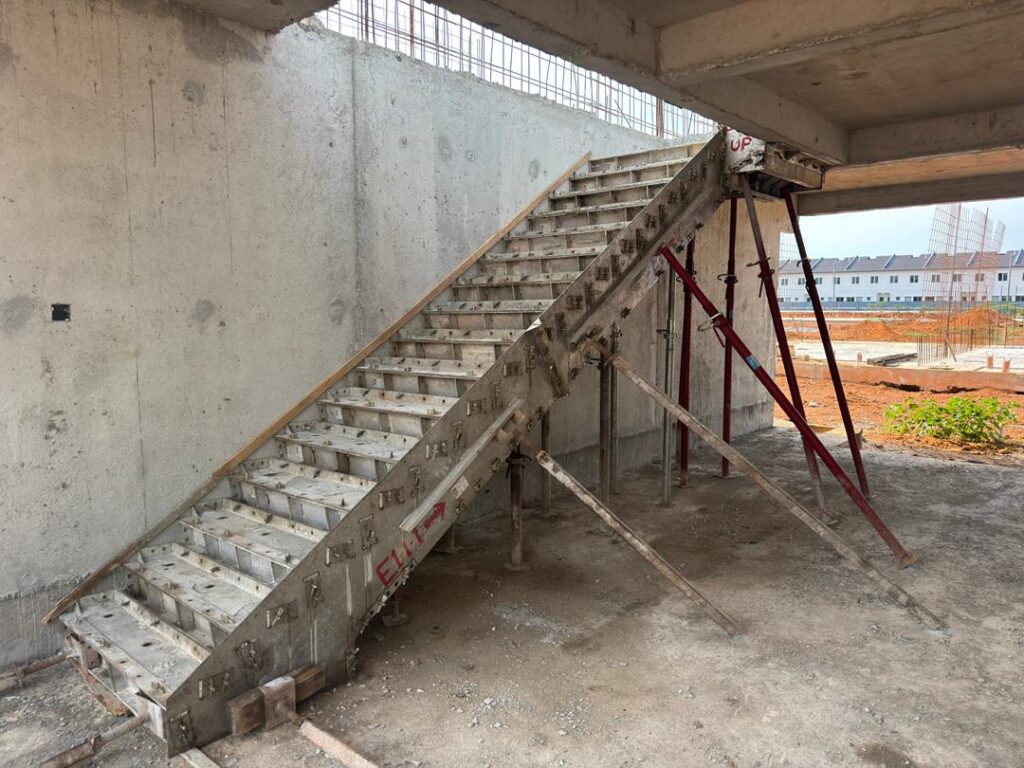
- Expanding our application of the IBS construction technique in our Property Division, which enables a higher degree of precision and thereby reduces material wastage
- Utilising steel and aluminium formworks, which offer greater reuse potential compared to timber and plywood, and thus further contribute to our long-term resource footprint reduction
- Reusing materials wherever practicable across both divisions
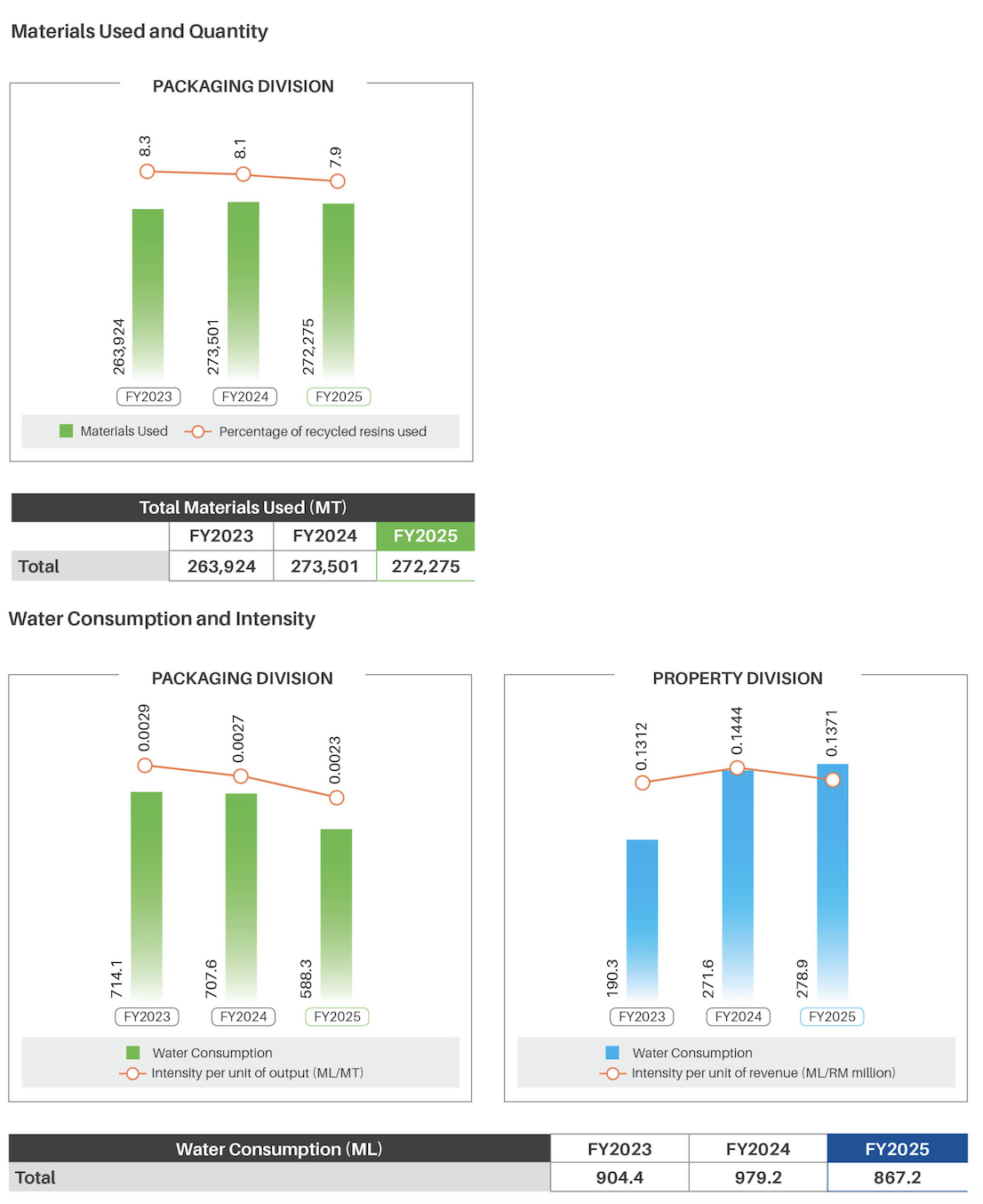
- Promoting the efficient and responsible use of water through water-saving measures
- Strengthening water management through initiatives such as closed-loop cooling, wastewater recycling and rainwater harvesting systems, which collectively reduce freshwater consumption and minimise wastewater discharge
OUR PERFORMANCE:
Reducing Energy Consumption & Emissions
Enhancing our Climate Action
Aligned to
As a major manufacturer and property developer, we recognise our role in supporting the transition to a low-carbon economy. Our opportunity lies in introducing renewable energy and energy efficiency initiatives within our operations, driving change across our supply chain and contributing to carbon offsetting through on-ground actions. By stepping up in this vital area of action, we further the trust of our stakeholders and future-proof our business amidst a fast-evolving sustainability landscape.
We are taking meaningful climate action by:
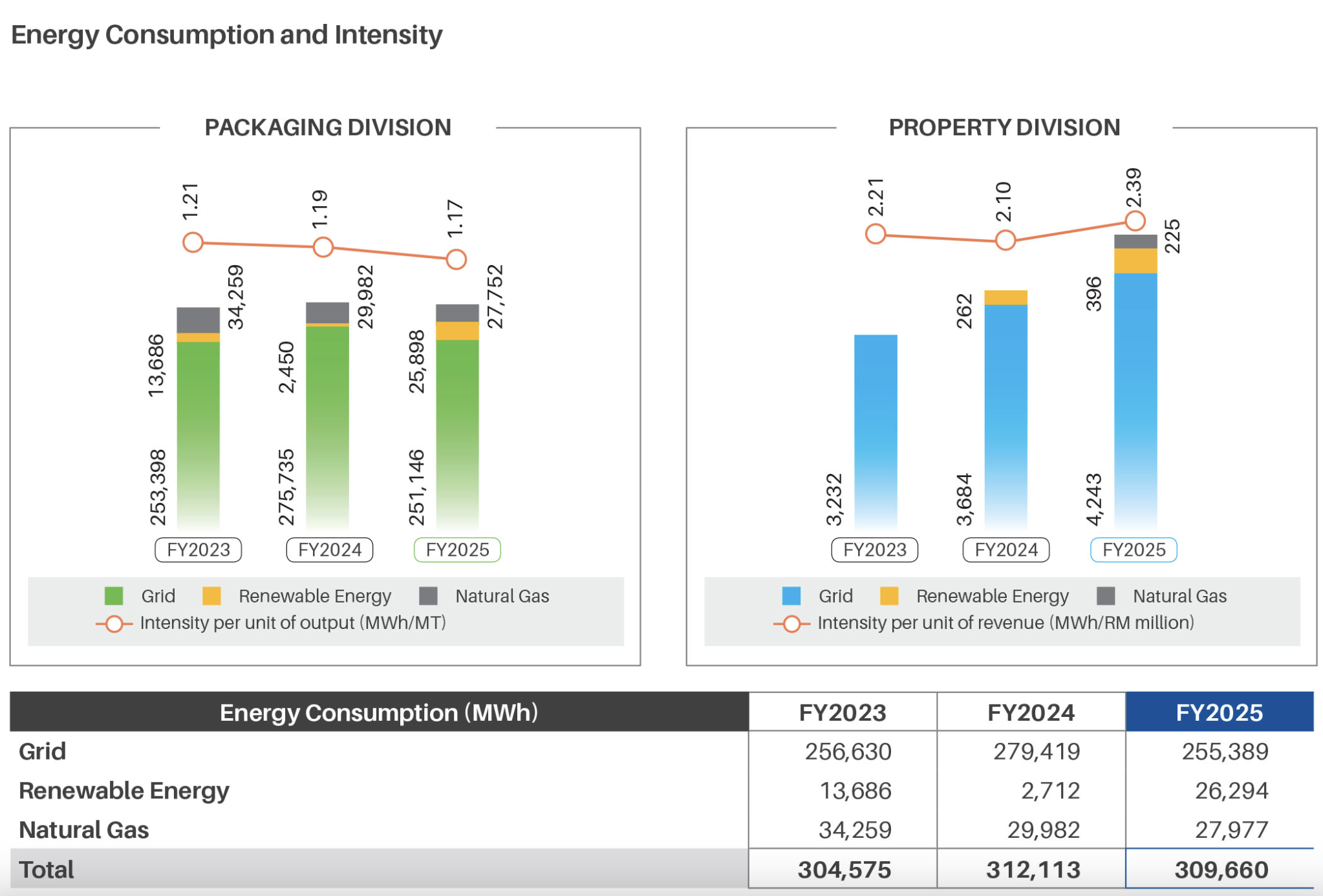
- Integrating energy-efficient technologies into our equipment and machinery to lower energy consumption and carbon emissions across our operations
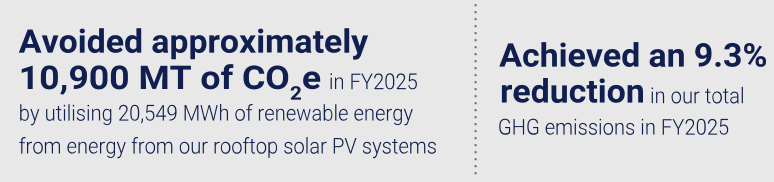
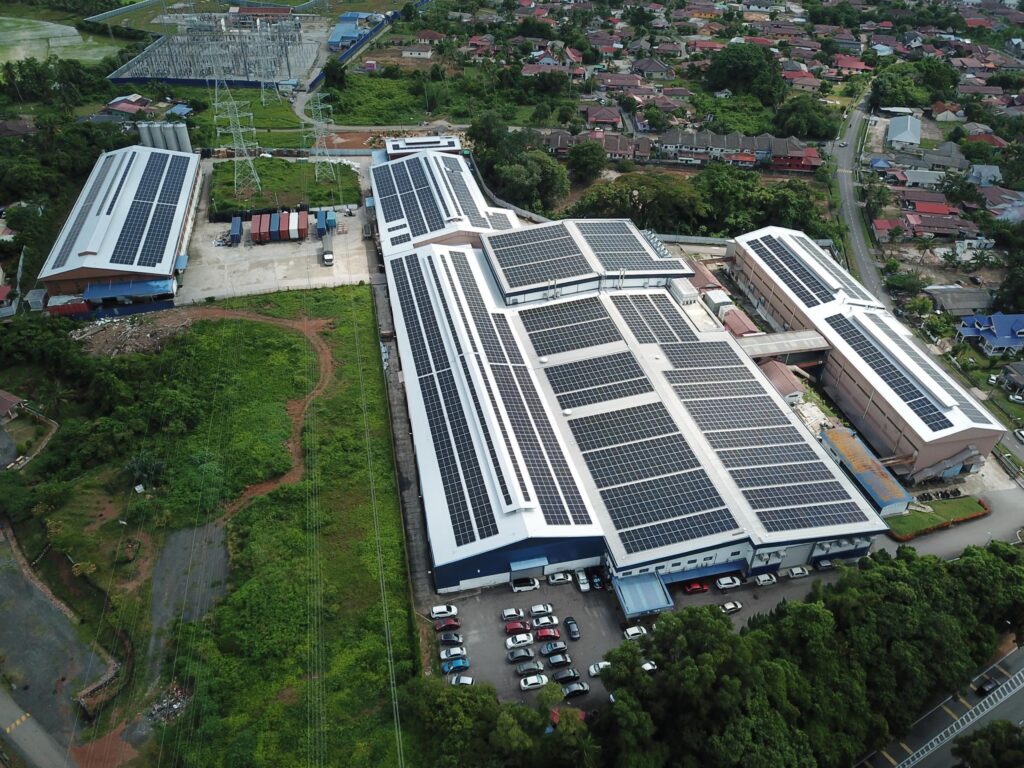
- Harnessing solar PV systems at 11 of our key manufacturing plants, property sales galleries and our Shah Alam headquarters, collectively providing approximately 23.9 MWp of solar capacity
- Leveraging our presence across the packaging value chain and further streamlining our processes to enhance our production efficiency and machine utilisation, thus reducing electricity consumption per output
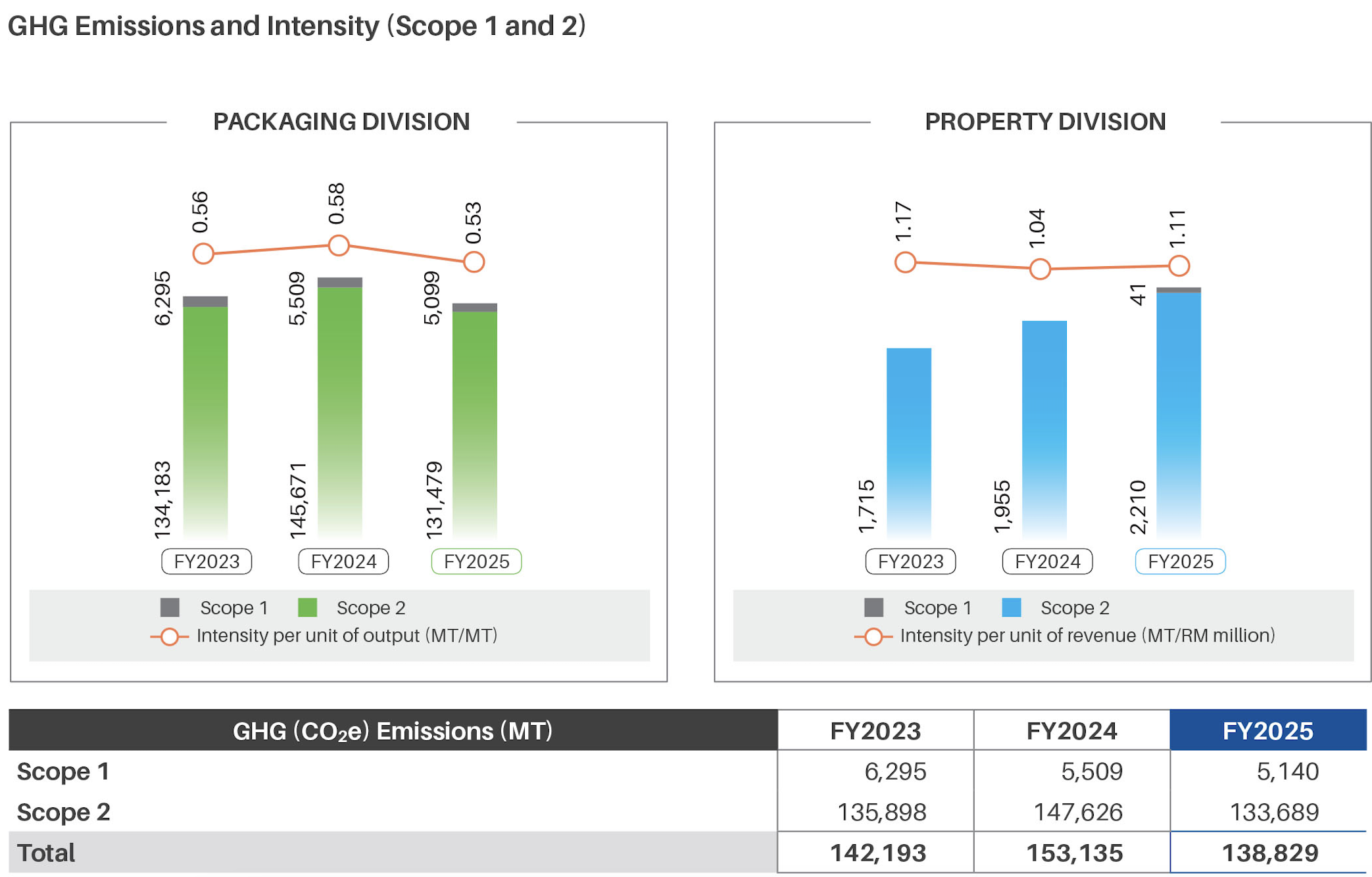
- Adopting circular practices to harness progressive long-term reductions in energy usage and decrease our GHG emissions per product
- Adopting efficient planning of house designs, thereby reducing the energy required by the homeowners for cooling purposes
- Promoting practices that reduce indirect emissions from logistics and throughout our supply chain
- Countering GHG emissions via initiatives such as our mangrove planting programme, which helps to sequester carbon from the environment
OUR PERFORMANCE:
Environmental Compliance
Upholding Environmental Management Excellence
Aligned to
Acknowledging the extent to which our operational activities may affect natural ecosystems such as land, air, water and soil, we steadfastly adhere to all applicable local and international environmental regulations and take steps to encourage compliance across our supply chain. In support of this, we continually strengthen our environmental sustainability framework to keep pace with emerging challenges and requirements, thus preserving our reputation as a responsible corporate citizen.
Our approach encompasses:
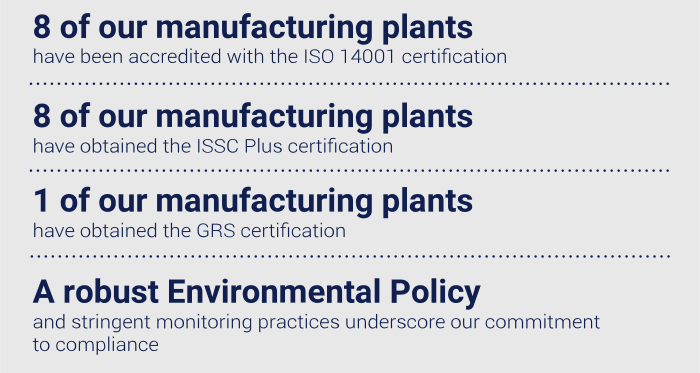
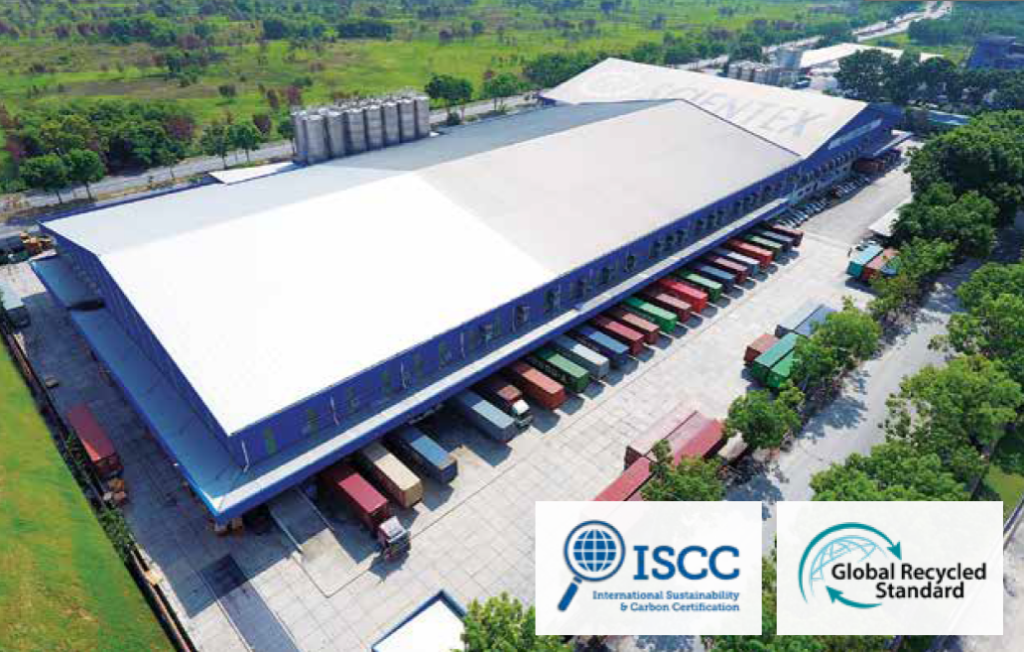
- Complementing our Group-wide Environmental Policy with a robust Environmental Compliance Framework that further establishes our commitment to stringent oversight and monitoring, regular training for employees, frequent engagement with regulators and obtaining globally recognised certifications
- Ensuring compliance with all relevant environmental laws and regulations in the various jurisdictions where we operate
- Undertaking regular engagements with authorities and attending relevant training sessions, courses and seminars to keep abreast of the latest updates and developments in environmental rules and regulations
- Adopting responsible project development practices in our Property Division, including via undertaking Environmental Impact Assessments (“EIA”) for projects exceeding 50 hectares in size
- Leveraging on our dedicated Health, Safety and Environment (“HSE”) Committee to oversee and monitor compliance across the Group’s operations
- Extending our environmental stewardship beyond compliance by undertaking environmental initiatives that benefit local communities, preserve the vital ecosystems, and protect biodiversity